Inquiry
Search...
automated battery cage system
1.
This guide, based on EU and FAO standards, analyzes the selection of automated layer cage systems. Data shows that H-type stacked systems can improve labor efficiency by 70% in farms with over 50,000 birds, with a payback period of 2–3 years [1][2]. The following sections provide decision-making support on system components, data comparison, return on investment, compliance, and a real-world case study in China.
2. Core Concept: What is an automated battery cage system?
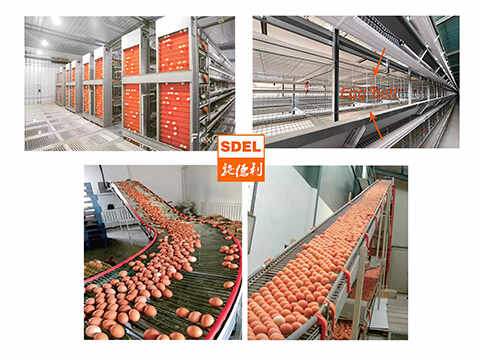
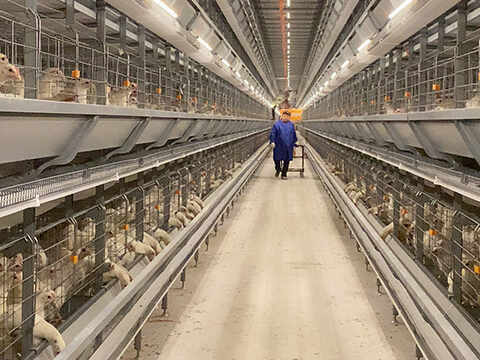
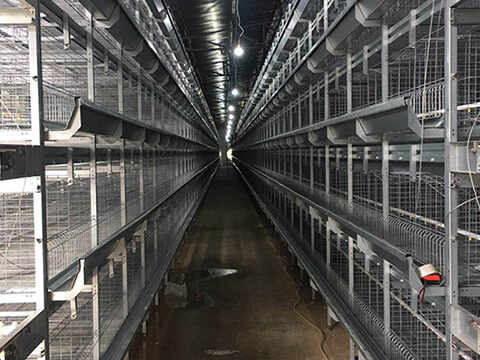
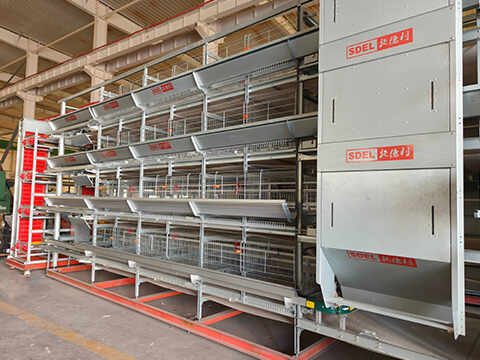
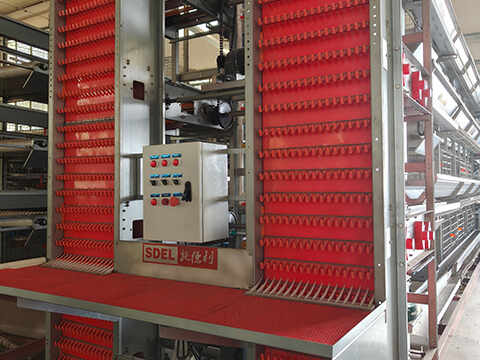
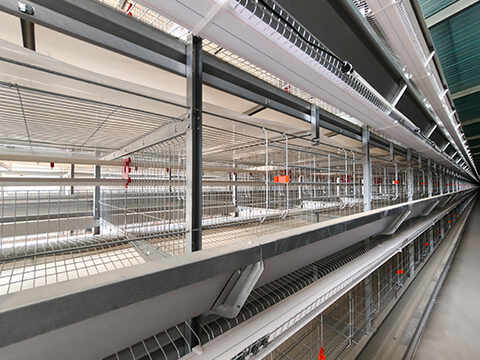
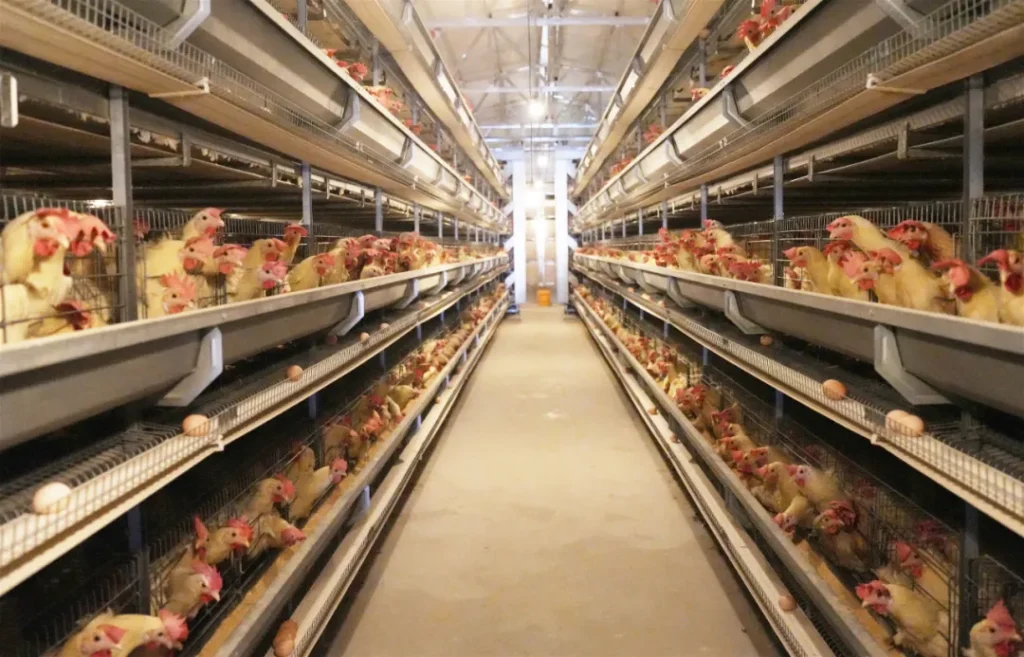
An automated layer cage system is not merely a “metal cage” but an integrated production system that combines feeding, drinking, manure removal, egg collection, and environmental control.
Key Components:
Precision Feeding System
Nipple Drinking System
Manure Removal Belts
Central Egg Collection
Environmental Control Unit
3. System Selection: A-Type (Stepwise) vs. H-Type (Stacked)
Core Decision Factors: Farming scale, initial investment, land cost, labor cost.
Parameter A-Type (Stepwise) H-Type (Stacked) Data Source/Notes
Recommended Scale < 30,000 birds > 50,000 birds Industry threshold [2]
Land Utilization 60–70% 85–95% +40% efficiency [2]
Investment per Bird ¥8 – ¥10 ¥12 – ¥15 Includes basic automation
Labor Cost per Bird ¥0.15 ¥0.07 50%+ savings [2]
Energy Consumption Low (natural ventilation) Higher (forced ventilation) H-type: ~1.1 kWh per bird/year [2]
Animal Welfare Fit Easier for cage-free Usually enriched cages Meets EU 1999/74/EC [1]
Selection Advice:
Scale < 30,000 birds: A-type is a more cost-effective option. Scale > 50,000 birds: H-type provides superior long-term ROI.
4. Key Performance Data & ROI Analysis
Performance Data Points:
Labor Efficiency: 1 person can manage 50,000–80,000 birds (3–5× higher than traditional) .
Feed Conversion: Improved by 5–8% (precision feeding reduces waste) .
Mortality Rate: Reduced by 2–5% (stable environment lowers disease risk) .
ROI Example:
For a 100,000-bird H-type farm, initial equipment investment is approx. ¥1,200,000. By saving labor, feed, and reducing mortality, additional profit of about ¥400,000 per year can be achieved, with a payback period of ~3 years [2].
5. Implementation & Commissioning: From Installation to Efficient Operation
Step-by-Step Process:
Site planning
Equipment installation
System commissioning
Staff training
Performance acceptance
Commissioning Essentials:
Feeder Calibration: Ensures even feed distribution per tier.
Water Pressure Adjustment: Prevents shortage at pipe ends.
EC Setpoint Configuration: Sets temperature, humidity, and ventilation curves.
6. Compliance & Future Trends
Compliance: Systems must comply with EU Directive 1999/74/EC [1] and China’s Regulation on Prevention of Pollution from Large-Scale Livestock and Poultry Farming [3].
Regulatory Note on EU Cage Systems
While the European Union banned conventional battery cages in 2012 under Directive 1999/74/EC, enriched cages remain legally permitted in most member states. However, several countries (such as Austria, Luxembourg, and soon Germany by 2028) have already phased out or committed to phasing out enriched cages. At the EU level, there are ongoing discussions and parliamentary motions calling for a complete ban on all cage systems, potentially by 2027, though no binding regulation has been enacted yet.
Future Trends:
IoT: Mobile apps for real-time flock monitoring .
AI: Health monitoring through vocalization analysis [2].
7. Case Study: China – 60,000-bird H-Type Layer Farm
c8ea15ce36d3d539c9f5ce9ada5aee5f372ab088
A commercial farm in Shandong Province implemented an H-type stacked layer cage system for 60,000 birds in 2022. Key results after 12 months:
Labor Efficiency: Reduced workforce from 15 people to 6 (60% savings).
Feed Conversion Ratio (FCR): Improved from 2.1 to 1.95, saving ~300 tons of feed annually.
Mortality Rate: Decreased from 6% to 3.5%, adding 1,500 more hens in production.
ROI: Initial investment of ¥7.5 million was offset by annual savings and higher egg output, achieving a payback period of just under 3 years.
This case validates the advantages of H-type systems in large-scale Chinese operations where land and labor costs are increasingly significant.
8. Conclusion
Automated battery cage system are the inevitable choice for cost reduction and efficiency in modern poultry farming. Defining your farm scale and budget, then selecting the appropriate system type, is the first step toward success. For a customized plan and precise ROI calculation tailored to your farm, contact us for a free consultation.
References
[1] EU Directive 1999/74/EC – Welfare of laying hens. https://eur-lex.europa.eu/legal-content/EN/TXT/?uri=CELEX:31999L0074
[2] FAO Poultry Sector Reports – Efficiency and scale benchmarks. https://www.fao.org/poultry-production-products
[3] State Council of China – Regulation on Prevention of Pollution from Large-Scale Livestock and Poultry Farming (2014). https://www.moa.gov.cn/gk/zcfg/xzfg/201311/t20131127_3687345.htm
Henan Sdeley Machinery Equipment Co., Ltd. is a wholly-owned subsidiary of the OUP Group, located in the Sdeley Industrial Park in Anyang City, a thousand-year-old ancient capital. The company has a total investment of 100 million yuan, covering an area of 1,000,000 square meters.